Key encapsulation
Sets up shared keys using lattice problems that no known quantum algorithm solves efficiently.
Quantum Compute
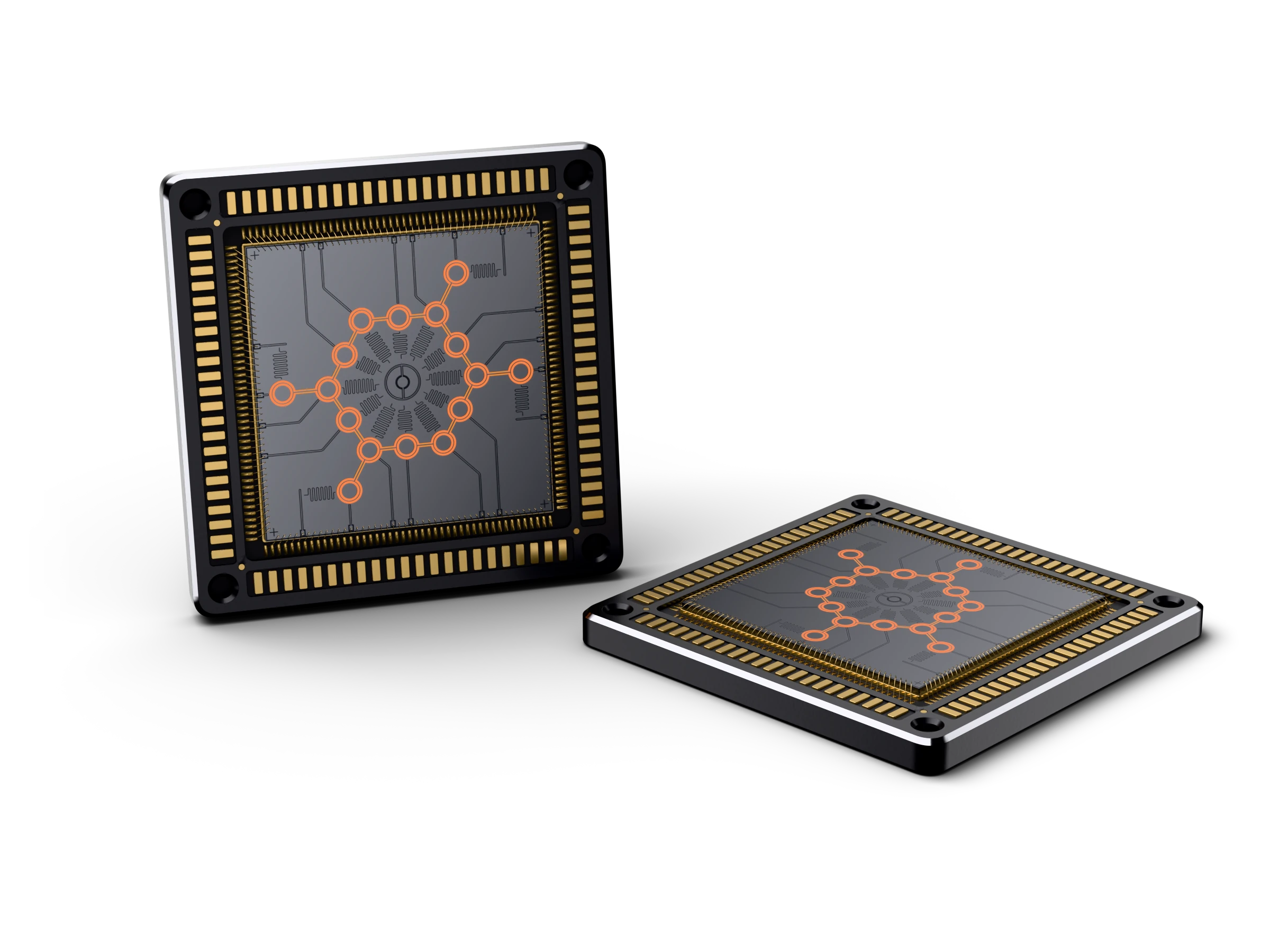
A 16-qubit superconducting processor near 15 mK, with surface-code error correction and post‑quantum security.
Illustration: the 16‑qubit processor and its heavy‑hex lattice.
16 superconducting qubits. Coupled on a heavy‑hex lattice, each to two or three neighbours, for less crosstalk.
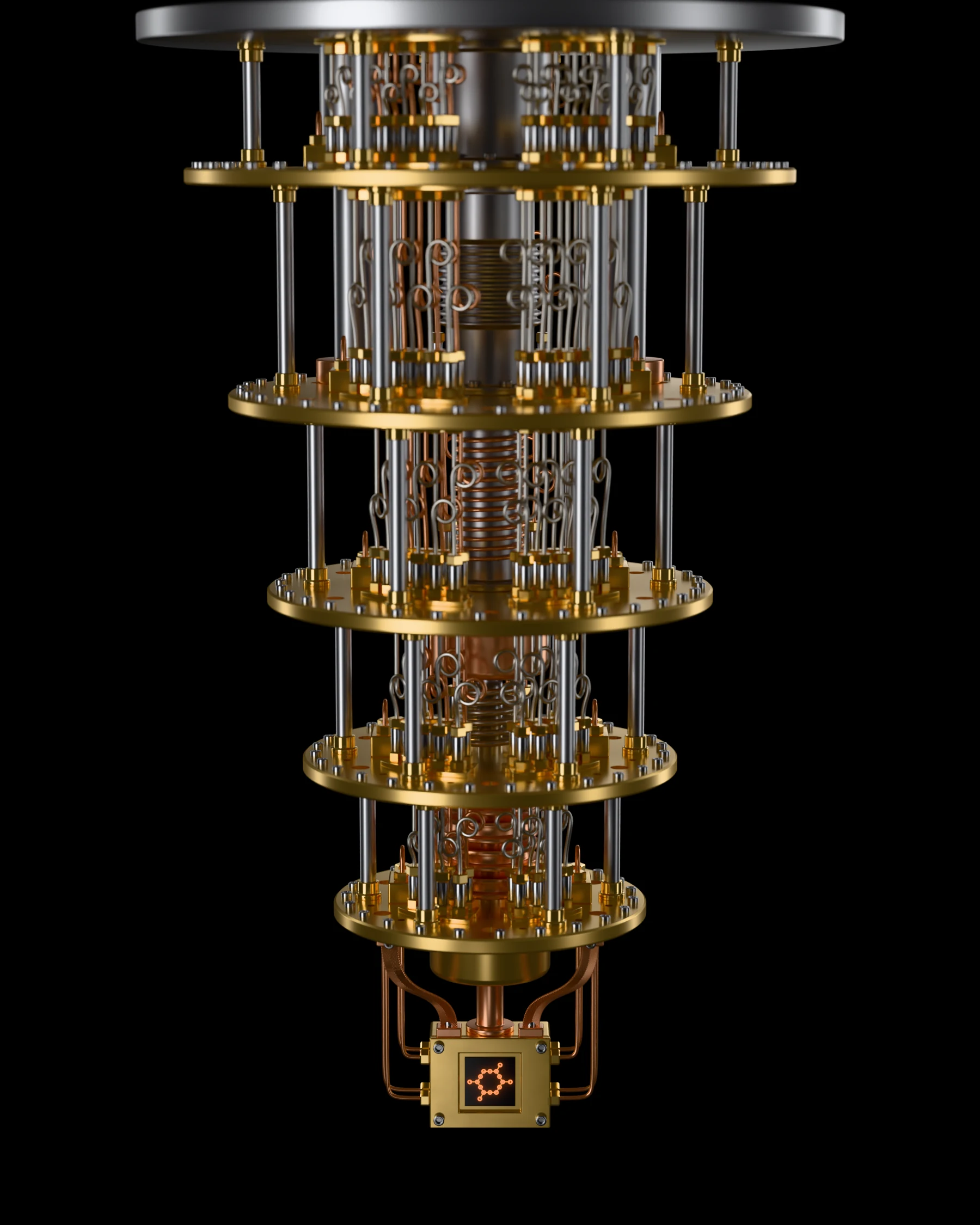
Held near 15 mK. The base temperature of its Bluefors XLD400 dilution refrigerator.
99.94% single‑qubit fidelity. And 99.4% for two‑qubit gates, driven by shaped microwave pulses.
Errors found without reading the data. A d=5 surface code checks the parity of neighbouring qubits every cycle.
Two locks on every session. X25519 and Kyber-1024 both feed the session key, so an attacker would have to break both.
Flip a qubit. The fairest coin there is: 0 or 1, each exactly half the time. Try it on this page.
Processor
The processor couples 16 superconducting transmons in a heavy‑hex pattern, where each qubit talks to two or three neighbours. Fewer connections mean less crosstalk. Shaped microwave pulses drive every gate.
01
Heat, stray fields and imperfect pulses nudge qubits off course. One flipped qubit is enough to spoil a result, and on a long calculation small errors pile up. So no answer can rest on a single physical qubit.
02
In a surface code, data qubits sit between measure qubits. Every cycle, each measure qubit checks the parity of its neighbours. A flip shows up as a pair of failed checks, without ever reading, and so destroying, the data itself.
03
A decoder reads the pattern of failed checks, finds the most likely error and undoes it. Working together, 49 physical qubits behave as one logical qubit that is more reliable than any one of them.
Surface code (d=5)
Superposition
Prepare a qubit in an equal superposition and measure it: it lands on 0 or 1, each exactly half the time. The fairest coin there is.
Measure the qubit.
0 measurements
A demo: your browser’s cryptographic random generator stands in for measuring a real qubit.
Security
Data intercepted today can be stored and decrypted once quantum computers are large enough. So MUTOWA Quantum pairs proven classical cryptography with NIST post-quantum algorithms now.
Transport runs two key exchanges side by side: X25519, trusted today, and Kyber-1024, built to resist quantum attacks. Both feed one session key, so an attacker would have to break both.
Each covers a different part of a secure connection.
Sets up shared keys using lattice problems that no known quantum algorithm solves efficiently.
Signs keys and results so they can be verified, and not forged, even by an attacker with a quantum computer.
Sends key material as single photons over optical fiber. Measuring a photon in transit disturbs it, so eavesdropping shows up.
Cryptographic inventory, risk assessment, and migration planning for systems that must remain secure over long time horizons.
Plan a migration with usMap cryptographic exposure, computational bottlenecks, and mission-critical data dependencies.
Test quantum-adjacent workflows in controlled, measurable environments.
Create hybrid interfaces and governance for future production capability.
The processor, its cryostat, control electronics, error correction, security and software, on one sheet.
Quantum Compute whitepaper (PDF)
The engineering detail behind the numbers, for those who want it.
Adds a small QPU to the compute node. Earn from quantum compute too.